Mobility and Recovery
Hip Flexor and Tight Hamstring Stretches: Gentle Mobility Guide
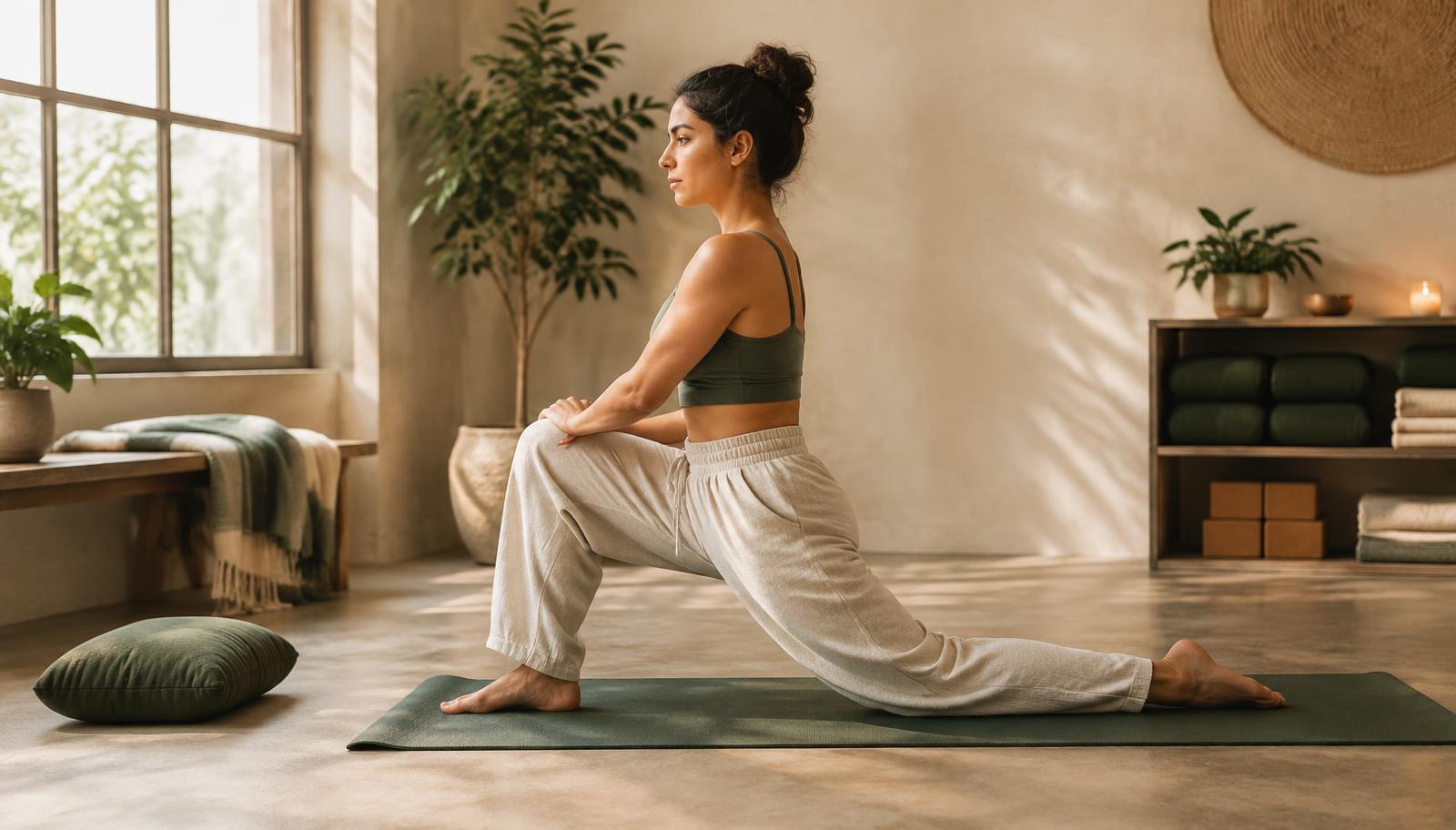
Hip flexors and hamstrings are two of the most commonly tight areas in people who sit a lot. They also work together: tight hips can change how your pelvis sits, which affects how your hamstrings feel, and vice versa. This guide covers gentle stretches for both, with steps, common mistakes, and safety notes.
Why These Areas Get Tight
When you sit, your hip flexors rest in a shortened position for hours at a time. Hamstrings can feel tight for many reasons, including prolonged sitting, training without enough recovery, or simply how your body is built. Feeling tight does not always mean a muscle is short; sometimes it means the area is sensitive or underused. Gentle, consistent movement is usually a better first step than aggressive stretching.
Gentle Hip Flexor Stretches
1. Half Kneeling Hip Flexor Stretch
Setup: Kneel on one knee with a cushion under it, the other foot flat in front of you, both knees at about 90 degrees.
- Keep your torso tall and gently tuck your pelvis, as if pulling your belt buckle toward your ribs.
- Shift your weight slowly forward until you feel a mild stretch at the front of the hip of your back leg.
- Hold without bouncing, then switch sides.
Starting hold or reps: 15 to 30 seconds per side, 2 to 3 rounds.
Breathing: Long, slow exhales; imagine the front of the hip softening each time you breathe out.
Common mistake to avoid: Arching the lower back to go deeper. The pelvic tuck is what targets the hip flexor.
Easier option: Place both hands on the front knee for support, or do a standing version with one foot stepped back.
2. Standing Hip Opener
Setup: Stand tall near a wall or chair for balance.
- Step one foot straight back and press that heel lightly toward the floor.
- Gently bend the front knee until you feel a stretch at the front of the back hip.
- Hold, then switch sides.
Starting hold or reps: 15 to 20 seconds per side, 2 rounds.
Breathing: Steady, even breaths; avoid leaning so far that you hold your breath.
Common mistake to avoid: Letting the back foot turn out. Keep the toes pointing forward.
Easier option: Shorten the step back for a gentler stretch.
Gentle Stretches for Tight Hamstrings
3. Supine Hamstring Stretch With a Towel
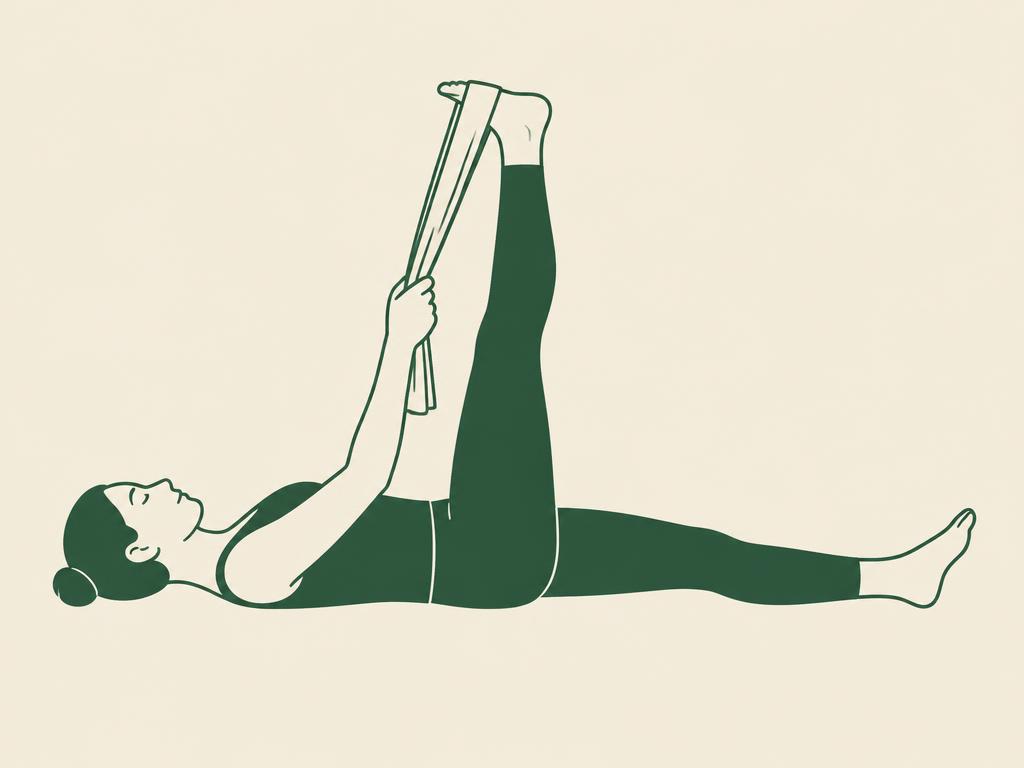
Setup: Lie on your back with both knees bent and a towel, belt, or strap looped around the ball of one foot.
- Slowly extend that leg toward the ceiling, keeping a soft bend in the knee.
- Hold the towel with both hands and gently draw the leg closer until you feel mild tension along the back of the thigh.
- Keep your lower back relaxed on the floor, then switch sides.
Starting hold or reps: 15 to 30 seconds per side, 2 rounds.
Breathing: Breathe in through the nose; each slow exhale can ease the leg slightly closer without forcing.
Common mistake to avoid: Locking the knee and pulling hard. A soft knee with mild tension is safer and more effective.
Easier option: Keep the raised knee more bent, or keep the opposite knee bent with the foot flat.
4. Seated Hamstring Stretch
Setup: Sit on the floor or a firm cushion with one leg extended and the other bent, foot resting against the inner thigh.
- Sit tall and hinge gently forward from your hips over the extended leg.
- Keep your back long rather than rounding toward your foot.
- Hold, then switch sides.
Starting hold or reps: 15 to 20 seconds per side, 2 rounds.
Breathing: Slow exhales as you hinge; never bounce.
Common mistake to avoid: Rounding the spine to reach the toes. The stretch comes from the hip hinge, not the reach.
Easier option: Sit on a folded blanket to tilt the pelvis forward, or bend the extended knee slightly.
5. Standing Hamstring Stretch on a Step
Setup: Stand facing a low step or sturdy stool.
- Place one heel on the step with the knee soft.
- Keeping your back long, hinge slightly forward from the hips.
- Hold, then switch legs.
Starting hold or reps: 15 to 20 seconds per side, 2 rounds.
Breathing: Breathe slowly and evenly throughout the hold.
Common mistake to avoid: Rounding the back or locking the knee on the step.
Easier option: Use a lower surface, or keep more bend in the knee.
Take the next step with Prana Body House.
Take the Free Body AssessmentHow Often, and How Hard?
Two or three gentle sessions per week is a sensible start, and short daily movement breaks help more than one intense weekly stretch. Aim for mild, comfortable tension.
Safety note: never force a range of motion or stretch into sharp pain, numbness, tingling, weakness, or symptoms that worsen as you move. Stop if any of these occur, and seek advice from a qualified healthcare professional for concerning, persistent, or unexplained symptoms. Stretching does not diagnose, treat, or cure any condition.
When Tightness Needs a Closer Look
Persistent tightness that does not change with gentle movement, pain after an injury, or discomfort that interferes with walking or sleep deserves professional assessment rather than more stretching. A qualified practitioner can help you understand what is actually limiting your movement.
To understand how your hips and hamstrings fit into your overall picture, start with the free Prana Body Scan. If you are curious about guided, one on one work, learn about stretch therapy at Prana Body House.
Educational disclaimer: This article is for general informational purposes and is not a substitute for medical advice, diagnosis, or treatment. Individual needs vary.